

Why the Neighborhood Matters More Than the House
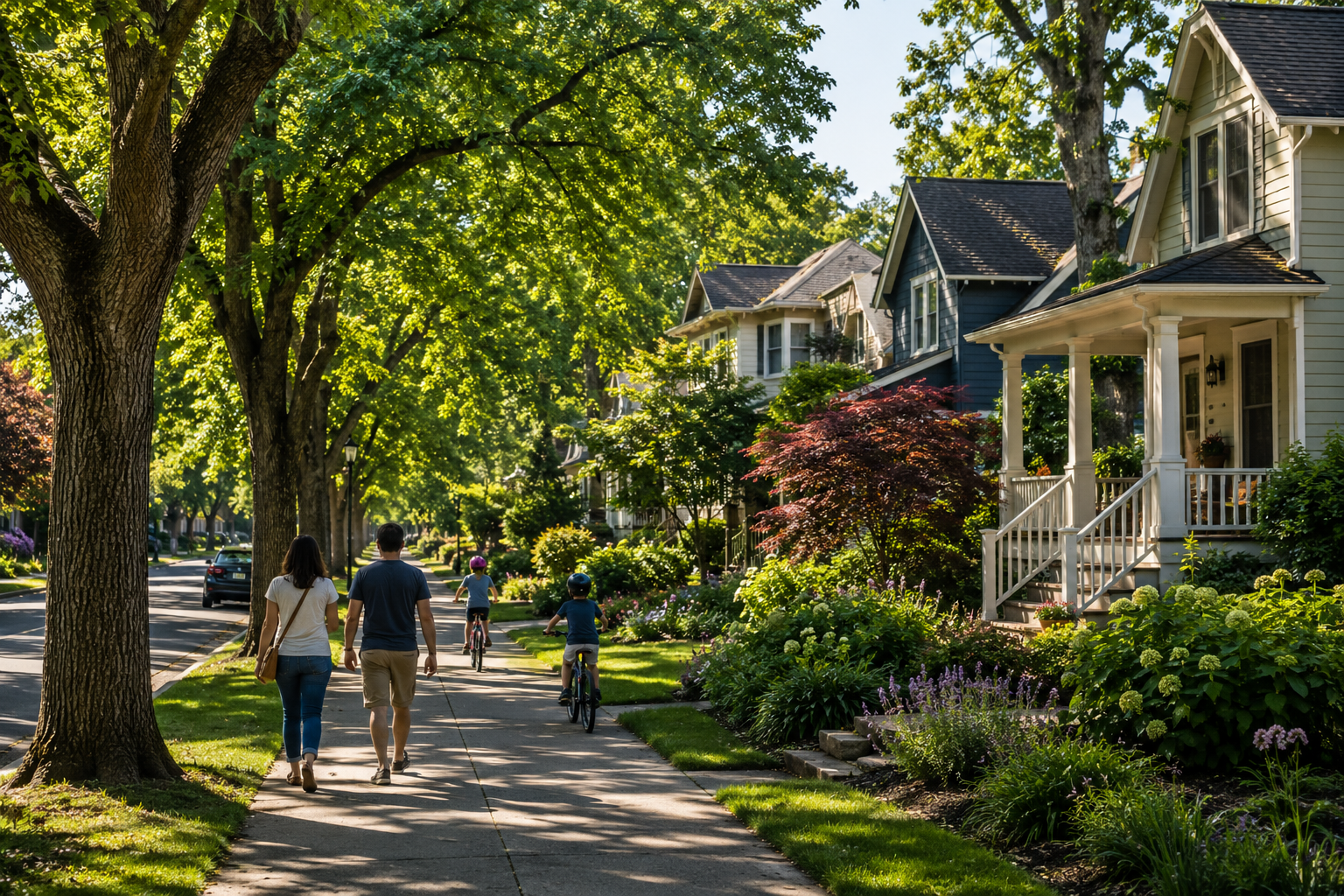
I think many homebuyers have this completely backwards.
When people start shopping for a home, they’ll spend hours talking about the kitchen. They’ll compare quartz versus granite countertops, debate paint colors, discuss flooring, and imagine where the couch will go.
Then they’ll spend about five minutes thinking about the neighborhood.
I think that’s usually backwards.
Here’s why.
You can remodel a kitchen. You can replace the flooring. You can repaint literally every wall, update the bathrooms, remove a wall (sometimes), add landscaping, or completely transform the interior over time.
What you can’t remodel is the neighborhood. You can’t widen the streets if they’re always congested. You can’t create sidewalks where none exist. You can’t move the nearby industrial building, quiet a busy road, or make the neighborhood park appear if it isn’t there already.
The location is the one feature of a home that is permanent.
Think about what your daily life will actually look like. Every morning you’ll drive those streets. You’ll pull into that driveway after work. You’ll wave to those neighbors. You’ll hear the traffic—or enjoy the quiet. You’ll walk those sidewalks, visit those parks, and probably stop at the same grocery store for years.
If you have children, they’ll ride bikes there, walk to nearby schools, and make friends in that neighborhood. If you’re a runner, you’ll learn every route. If you enjoy restaurants, coffee shops, or farmers markets, those nearby amenities become part of your routine.
The house is where you live.
The neighborhood is how you live.
That’s why I encourage buyers to spend as much time evaluating the neighborhood as they do evaluating the home itself.
Drive through on a weekday. Come back on a Saturday afternoon. Visit in the evening. Take a walk instead of just driving through. Notice how people maintain their homes. Pay attention to noise levels. See whether you enjoy simply being there.
I’ve had buyers completely change their opinion about a home after spending thirty minutes exploring the surrounding neighborhood. I’ve also had buyers become much more excited about an average-looking home because they realized it was in a neighborhood they genuinely loved.
A beautiful home in the wrong location often loses its appeal over time.A good home in the right neighborhood can become one of the best decisions you ever make.
Of course, the house still matters. It needs to fit your budget, your lifestyle, and your long-term goals.
But before you fall in love with the house…
Make sure you’ve fallen in love with where it sits.
If you’re thinking about buying a home in the Portland area, I’d be happy to help you evaluate not just the house, but the neighborhood too. Sometimes that’s the difference between finding a house you like and finding a place that truly feels like home.
Frequently Asked Questions
It can be. Your biggest challenge here might be that you get distracted by all the other homes being nicer than yours. If you're not impacted by that sort of thing, though, than getting the "worst" house in the neighborhood can be a good investment and can mean you live "up" in location versus what your budget might predict.
Speaking purely from an investment standpoint, I'd recommend against that. The best home likely won't appreciate in value as well. In higher end neighborhoods, this is less of an issue, though.